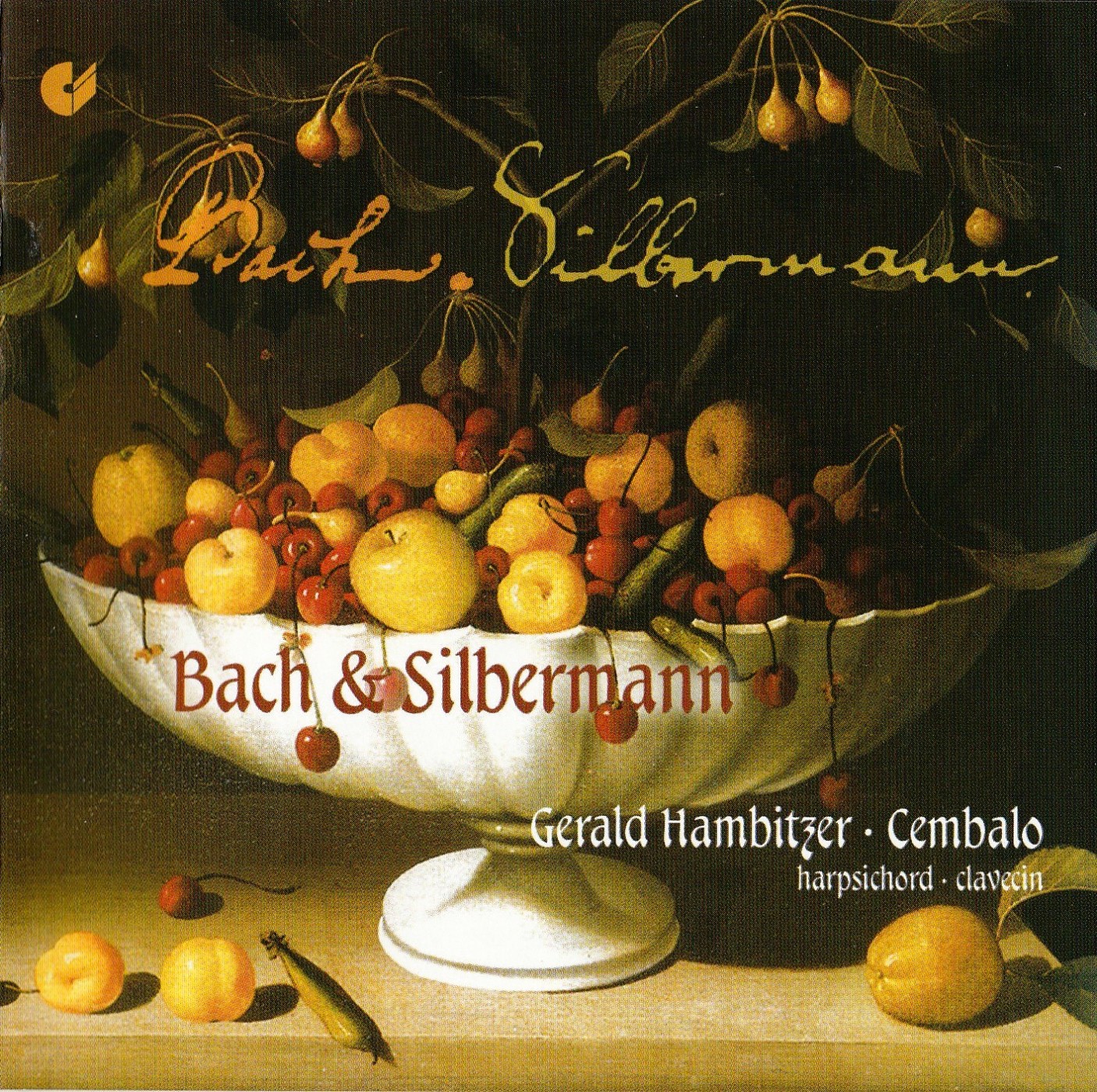
Ferruccio Busoni (1866-1924)
1-3. Fantasia, Adagio e Fuga (after J.S. Bach's BWV 906 and 968)
Mozart - Piano Concerto No. 9 in E-Flat Major, K. 271, "Jeunehomme": II. Andantino
4. Mozart - Piano Concerto No. 9 in E-Flat Major, K. 271, "Jeunehomme": II. Andantino
5-12. Klavierübung in 5 Teilen (first edition, 1917-22), Part IV: 8 Etudes after Cramer
Johannes Brahms / Ferruccio Busoni - Arranger
13-18. 11 Chorale Preludes, Op. 122 (arr. F. Busoni for piano) (excerpts)
Franz Liszt, / Ferruccio Busoni - Arranger
Der Tanz in der Dorfschenke, S110/R427, "Mephisto Waltz No. 1" (arr. F. Busoni for piano)
Wolf Harden - Piano 
Mostrando postagens com marcador Bach. J.S (1685-1750). Mostrar todas as postagens
sexta-feira, 3 de outubro de 2025
BUSONI : Piano Music • 10 — Transcriptions of Works by J.S. Bach, Brahms, Cramer, Liszt and Mozart (Wolf Harden) (2018) FLAC (tracks), lossless
Busoni embodied an essentially recreative approach to the music of
the past. His Bach transcriptions reveal an absolute command of
intricate polyphony and a limpid clarity. Mozart stood as an aesthetic
and technical exemplar while Cramer’s little-known Etudes are adapted
for modern piano technique. Busoni preserved the Lutheran austerity of
Brahms’s Chorale Preludes for Organ, Op. 122 whereas in the Mephisto
Waltz No. 1 he augments Liszt’s heady writing with a super-virtuosity of
his own. naxos
quinta-feira, 2 de outubro de 2025
BUSONI : Piano Music • 11 — Ten Chorale Preludes · Sonatina brevis Nº.5 · Preludio al Corale e Fuga (Edizione minore) Prelude, Fugue and Allegro (Wolf Harden) (2019) FLAC (tracks), lossless
Transcriptions
occupied Ferruccio Busoni from early in his career, but his famously
Romantic version of the Chaconne in D minor (Naxos 8.555699) contrasts
with the later and more austere Sonatina brevis based on Bach’s Fantasy
and Fugue in D minor, BWV 905. Music from Bach’s The Art of Fugue is
invoked in the rarely heard Edizione minore version of the Fantasia
contrappuntistica, and the Ten Chorale Preludes include the glorious
Wachet auf, ruft uns die Stimme. Sir Edward Elgar considered Busoni ‘the
greatest musical mind of his time’, and Wolf Harden’s playing of Busoni
has been described as ‘the clear current benchmark’ (BBC Music Magazine
on Volume 2, 8.555699). naxos
Ferruccio Busoni (1899-1924)
1. Sonata Brevis (No. 5) 'In Signo Joannis Sebatiani Magni', BV.280 (1919) 5:11
2-6.
Preludio Et Corale E Fuga Sopra Un Frammento Di Bach (Edizione Minore
Della Fantasia Contrappuntistica), BV. 256a (1912) 18:57
7. Prelude, Fugue And Allegro In E Flat Major, BWV 998, BV B.36 (1915) 8:36
J.S. Bach / Ferruccio Busoni - Arranger
8-17. Ten Chorale Preludes, BV B. 27 (1898)
J.S. Bach / Transcription By – Ferruccio Busoni
Wolf Harden - Piano
sexta-feira, 29 de dezembro de 2023
sábado, 22 de agosto de 2020
sexta-feira, 21 de agosto de 2020
FILOMENA MORETTI - Filomena Moretti plays Albeniz, Bach, Barrios, De Falla, etc. (2002) APE (image+.cue), lossless
sábado, 15 de agosto de 2020
quinta-feira, 13 de agosto de 2020
quarta-feira, 12 de agosto de 2020
segunda-feira, 3 de agosto de 2020
J. S. BACH : Morimur (The Hilliard Ensemble-Christoph Poppen) (2001) APE (image+.cue), lossless
It was quite popular, in the Baroque era, to use numbers and equations for riddles and the hiding of messages; and the study of J.S. Bach's work has revealed that he used numbers symbolic of notes in the major and minor scales formulated into equations and then composed his works around these equations. It was with one such series of equations that researchers found that inside of J.S. Bach's music there was a large number of other compositions almost fractally entwined. Of particular interest was J.S. Bach's "Six Sonatas and Partitas for Solo Violin" which had been designed with a sort-of numeric equation that turned out to actually have the music fractally built around a very small part. Intrigued by researcher's findings Christoph Poppen discussed with ECM Records head and producer Manfred Eicher the possibility of a recording that would make the "hidden chorales" as the smaller, fractal pieces were later termed, more audible. A collaboration with the excellently gifted interpreters of early music, the Hilliard Ensemble was proposed and with Christoph Poppen directing they set about liberating the numeric/ melodic equations from the fabric of J.S. Bach's "Partita No. 2". With Morimur for the first time we hear the music the way that J.S. Bach might have heard it when he was composing his "Partita No. 2 as they are linked with various chorales that also used the numeric equation that is found in "Partita No. 2". Beyond the fascinating story behind Morimur it's an excellently well crafted, and well-produced recording that truly brings the piece to life. If you're a fan of J.S. Bach it is recommended that you give this recording a listen as it is fantastic and excellently read with the Hilliard Ensemble in top form. A must have for your collection!. by Matt Borghi
segunda-feira, 27 de abril de 2020
terça-feira, 3 de março de 2020
RICHARD GALLIANO - Bach (2010) Mp3

French accordionist and bandoneon player Richard Galliano has spent much of his career demonstrating that his instruments can be employed not only in the service of folk music, but also to play jazz. His long tenure on Dreyfus Records was spent in that endeavor, but with Deutsche Grammophon, the venerable classical label, he naturally takes a different tack, here adapting himself to the demands of Johann Sebastian Bach. The substitution of accordion for keyboard instruments, notably in the three-part Concerto for Harpsichord, Strings, and Continuo No. 5 in F Minor, BWV 1056 and Contrepoint 1 -- L'Art de la Fugue en Ré Majeur, BWV 1080, is a natural, yet Galliano does not stop there. He also replaces the violin in the three-part Violin Concerto No. 1 in A Minor, BWV 1041 and the Concerto for Violin, Oboe, and Strings in D Minor, BWV 1060; the cello in the "Prélude" movement of the Suite for Cello Solo No. 1 in G, BWV 1007; and the flute in the "Allemande" section of the Partita for Solo Flute in A Minor, BWV 1013. These pieces written for strings and a reed require a fluidity of playing that Galliano succeeds in reproducing on his keys. And there are gains in his choice of instrument, notably in the slow "Largo" movement of the harpsichord concerto, since the accordion's notes have a longer decay than those for the harpsichord, giving greater resonance to the music. Galliano is ably accompanied by a chamber orchestra consisting of two violins (Jean-Marc Phillips-Varjabédian and Sébastien Surel), viola (Jean-Marc Apap), cello (Raphaël Pidoux), and bass (Stéphane Logerot). But they only provide support, and often they drop out entirely as Galliano re-creates the majesty of Bach's music on his accordion, proving its worth as a formal instrument, just as he has previously as a jazz axe. by William Ruhlmann

Assinar:
Postagens (Atom)